Bathrooms
Tub-to-shower conversion in NYC: what's involved.
A tub-to-shower conversion in NYC looks simple: tub out, walk-in shower in. In practice it touches the drain, the valve, the waterproofing and sometimes the board. Here is what actually changes.
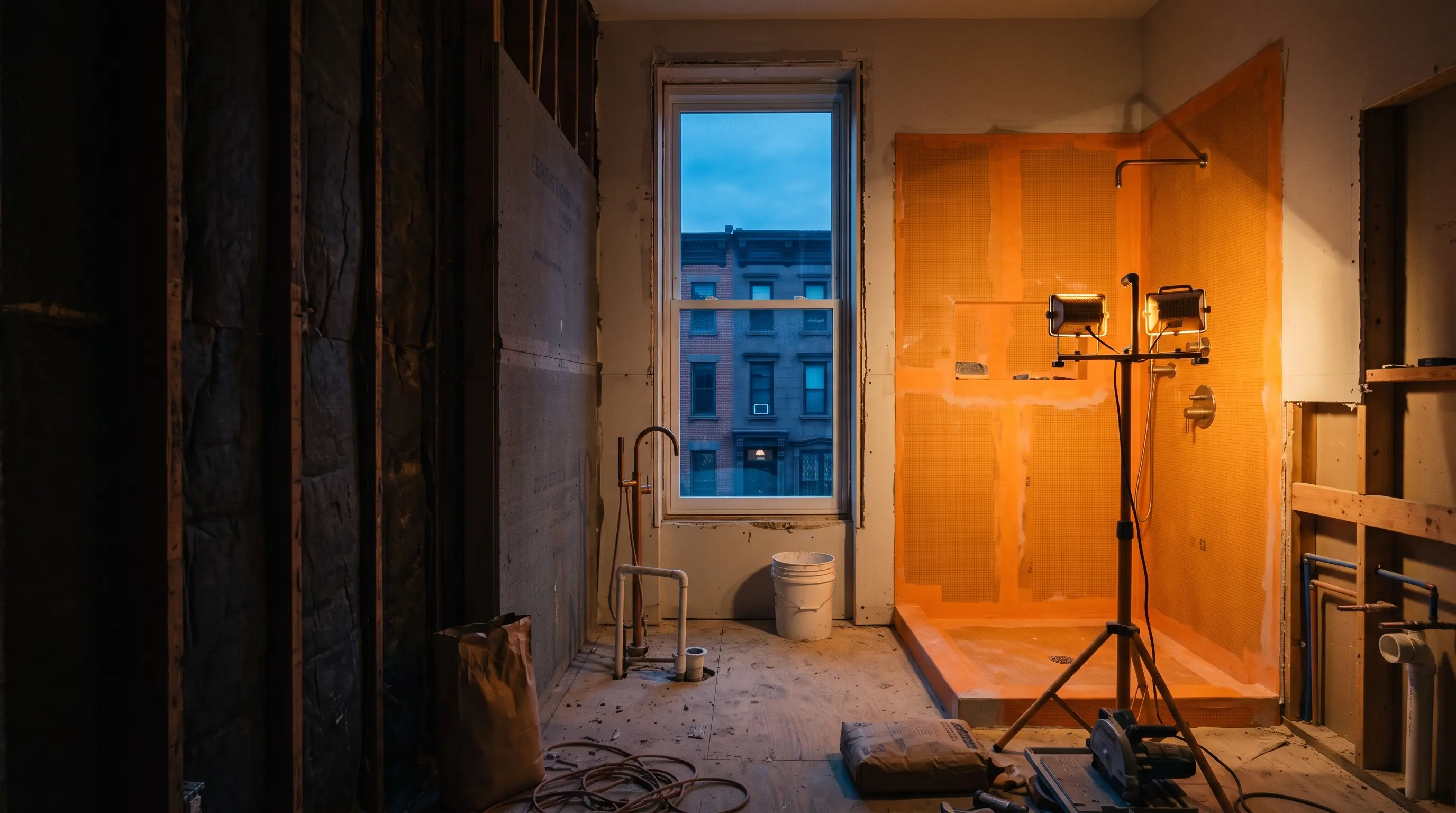
A tub-to-shower conversion is one of the most common bathroom projects in New York. The tub takes up the most space in a small bathroom, gets used the least, and a glass walk-in shower makes the room feel twice as big.
On paper it is a swap: tub out, shower in. In a New York apartment or brownstone, it is a small renovation. The drain, the valve, the waterproofing and the floor all change, and in co-ops and condos the building has a say. Here is what is involved, so you can plan it properly.
What changes when the tub comes out
The drain
A tub drain sits at one end of the tub, close to the wall. A shower drain usually sits in the middle of the shower floor or along one edge with a linear drain. That means the drain line under the floor often has to be moved, and sometimes enlarged, to carry the flow of a shower.
In a brownstone or rowhouse, the drain usually runs between wood joists, so moving it is mostly a question of slope and of not cutting through anything structural. In a pre-war or concrete apartment building, the drain runs in or under a concrete slab and ties into a shared riser. There is less room to move it, and the work affects the building’s plumbing, which is why boards want to see the plan.
The valve and shower head
A tub filler and a shower valve are different fixtures. Most conversions get a new valve in the wall, with the anti-scald protection that plumbing codes require for showers, and a new shower head, and often a hand shower. Because the wall has to be opened to change the valve, it is the right moment to replace old supply lines too.
Waterproofing: the part you never see
A tub holds water in its own shell. The wall above it gets splashed, but the floor under it stays dry. A shower is different: the whole shower floor and the walls around it become a wet area.
A proper shower is built with:
- a waterproofing membrane on the floor and up the walls, continuous into the drain,
- a floor sloped toward the drain so water never sits under the tile,
- a test of the waterproofing before any tile goes on.
This is the step that protects the apartment below and your own floor structure. It is also the step most worth asking about when you compare estimates.
Curb or curbless
You have two ways to keep water inside the shower:
- A low curb: a small step at the edge of the shower. It works in almost any building.
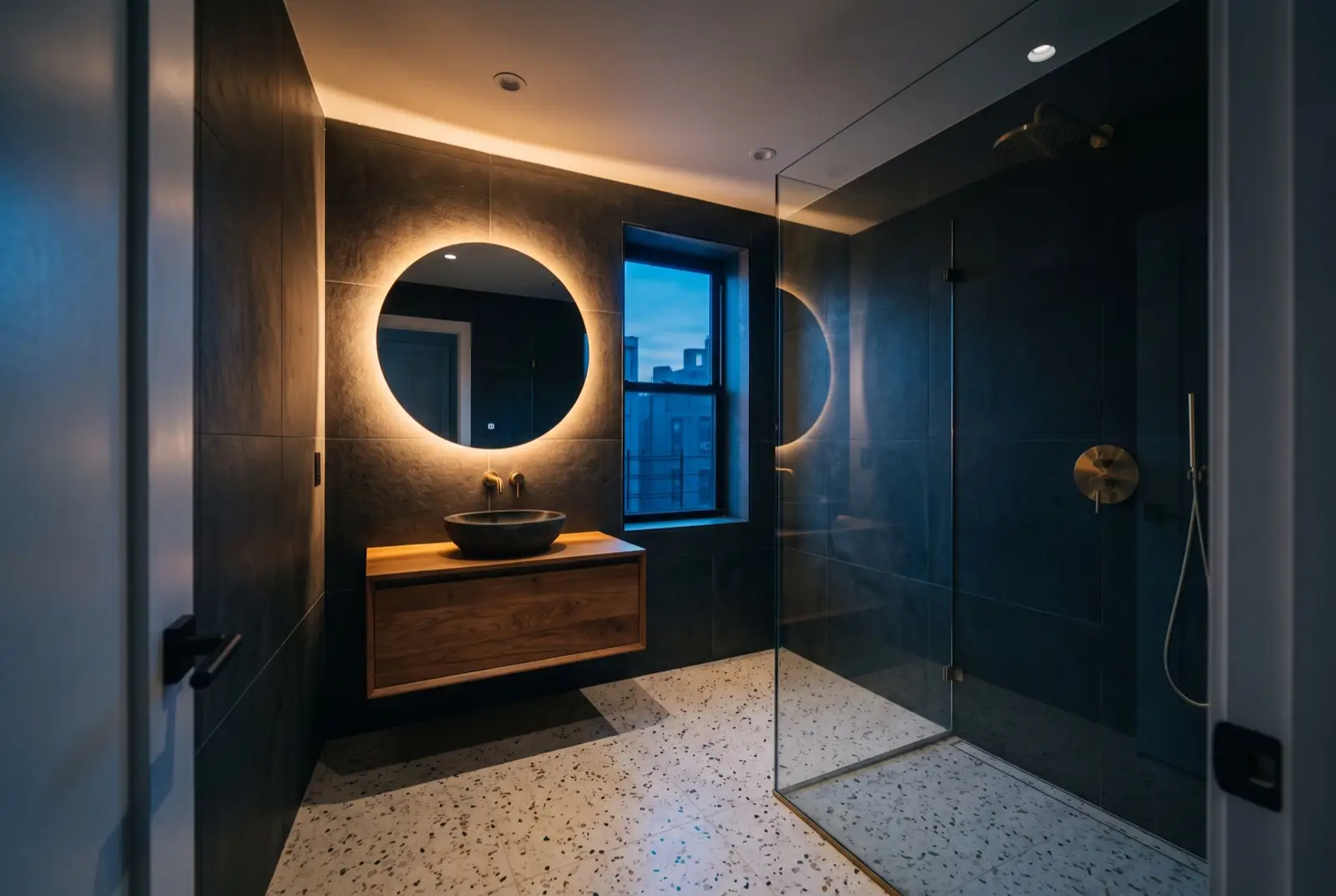
- Curbless (zero-threshold): the shower floor sits slightly lower than the bathroom floor, with no step. It looks cleaner and is easier to use for anyone with limited mobility.
Curbless needs depth under the shower floor. In a wood-framed brownstone it may be possible to recess the floor between joists, after an engineer or experienced contractor confirms it. In a concrete building, the usual answer is to raise the rest of the bathroom floor slightly instead.
Glass, light and air
A fixed glass panel instead of a door keeps the room open and has fewer parts to wear out. Plan the glass after the tile layout, since it is measured once the walls are finished. And make sure the bathroom has an exhaust fan that vents properly: a shower puts far more steam into a small New York bathroom than a tub ever did.
Tub-to-shower conversion permits in NYC
The NYC Department of Buildings separates plumbing work into levels:
- Direct replacement of a fixture in the same place, without changing its valves or trap, is treated as cosmetic. It needs no permit, but must be done by a Licensed Master Plumber.
- Limited plumbing work, such as replacing fixtures or adding a small number of them, is filed by a Licensed Master Plumber through a Limited Alteration Application.
- Larger renovations, for example adding a bathroom or rerouting lines, need an alteration permit filed by a registered architect or professional engineer.
A tub-to-shower conversion with a new valve and a moved drain usually sits in the middle category, and in many cases goes beyond it if the bathroom is fully renovated at the same time. New lighting circuits or outlets are separate electrical work with their own filing. If your building is landmarked, interior work that needs a DOB permit also needs approval from the Landmarks Preservation Commission first.
For the full picture of who files what, read our guide on permits for kitchen and bathroom renovations in NYC.
Co-ops and condos: the building comes first
If you live in a co-op or condo, the building’s rules decide a lot before the city does. Expect to:
- submit your plans and scope under the alteration agreement,
- show how the new drain ties into the riser and that the shower stays over a wet area below,
- provide the contractor’s insurance certificates in the form the building asks for,
- work inside the building’s hours, which are often narrower than the city’s.
Our guide to renovating a co-op in NYC walks through the alteration agreement step by step.
Brownstones and townhouses
In a Park Slope brownstone or a Brooklyn Heights townhouse, the building is yours, so there is no board to satisfy, but the house has its own surprises. Old cast-iron or galvanized pipes, joists notched by earlier plumbers, and floors that are no longer level are common once the tub comes out. Leveling the floor and replacing old lines while everything is open is far cheaper than doing it later.
What drives the cost
Every bathroom is different, so we don’t publish a single price. These are the factors that move the number the most:
- How far the drain moves, and whether it means opening the ceiling below.
- Curb or curbless, and the floor work that curbless requires.
- Size and type of glass: a fixed panel costs less than a door with hardware.
- Tile: large-format porcelain, mosaics or stone each take different labor.
- What is behind the walls: old supply lines, rot under the tub, uneven joists.
- Building requirements: approvals, insurance, elevator bookings and work hours.
Before you call a contractor
A short list that makes the first conversation more useful:
- Photos of the bathroom, including the ceiling of the room below if you can access it.
- The building’s alteration agreement or house rules, if you are in a co-op or condo.
- Whether this is the only tub in the home.
- A rough idea of the shower you want: curb or curbless, door or fixed panel, niche, bench.
If you are planning a tub-to-shower conversion in Manhattan, Brooklyn or Queens, see how we approach bathroom remodeling, or send us a few photos for a free estimate.
Quick answers
Can I replace a bathtub with a shower without a permit in NYC?
Directly replacing a fixture in the same place, without changing its valves or trap, is treated by the Department of Buildings as cosmetic work that does not need a permit, but it must still be done by a Licensed Master Plumber. Converting a tub to a shower usually goes further than that (a new valve, a moved or resized drain), which means a plumbing filing and, in many buildings, board approval.
Can I have a curbless shower in an apartment?
Sometimes. A curbless shower needs the shower floor to sit lower than the bathroom floor so water runs to the drain. In concrete apartment buildings that usually means raising the rest of the bathroom floor; in wood-framed brownstones it may be possible to recess the floor, after a structural check.
Should I keep at least one bathtub in my home?
It depends on who lives there. Families with small children often want one tub in the home; for a primary bathroom used by adults, a larger shower is a common upgrade. If the bathroom you are converting has the only tub, think about it before you decide.
Sources
- NYC Department of Buildings: Renovating kitchens & bathrooms
- NYC Department of Buildings: Plumbing permits
- NYC Department of Buildings: Limited Alteration Applications
This guide is general information, not legal or professional advice. Rules change and vary by building: confirm the details for your project with your architect, your building and the city agencies listed above.